Carma Spence has been experimenting in the kitchen since she was four years old and loves trying out new recipe ideas. She is the author of Bonkers for Bundt Cakes and Your Perfect Pie, as well as author and contributor to several more non-food-related books. With Carma's Cookery, she is taking her passion for empowering people and blending it with her passion for cooking, gift-giving and entertaining.
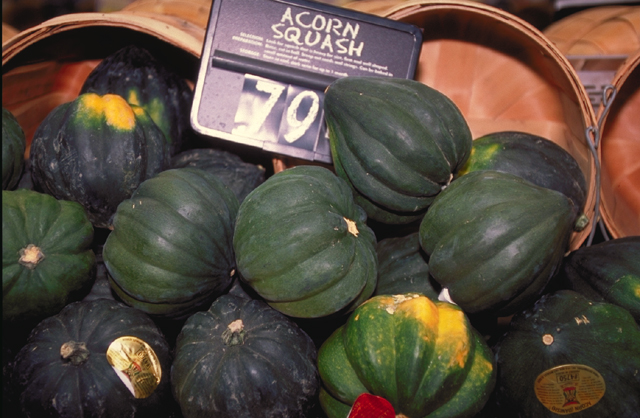
Public domain image from the United States Department of Agriculture via Wikimedia Commons.
Public domain image from the United States Department of Agriculture via Wikimedia Commons.One of my favorite side dishes when I was growing up was acorn squash. My mother would bake it and then serve it with melted butter and brown sugar. Yum!
In honor of National Acorn Squash Day, which is today, I thought I’d share information about this hearty fall vegetable that can be so versatile.
Although like other winter season squashes, such as the pumpkin, it has a firm outer shell … kind of like a gourd … it is actually related to the summer squashes, such as zucchini and yellow crookneck squash.
Acorn squashes provide a decent amount of nutrition. They contain vitamin A, niacin, folate, thiamine and vitamin B-6. In addition, a 1/2-cup serving of cooked, cubed acorn squash provides approximately 20% of the recommended daily allowance of vitamin C for healthy adults following a 2000-calorie diet. Of course, how much vitamin C you receive from your serving depends on how your prepare it.
If you want to get the most vitamin C out of your acorn squash, use it 3-4 days after purchase and cut it just before cooking. Also, steam or bake it — boiling will leach the vitamin C out into the water.
Acorn squash is also a good source of potassium and magnesium. That same 1/2-cup serving provides 13% of the recommended daily allowance (RDA) of potassium and 11% of magnesium.
Acorn squash provides fiber and antioxidants, as well.
Given its nutritious content, acorn squash is able to impart several health benefits:
Its Vitamin C helps boost your immune system
Its Vitamin A helps improve vision and contributes to good skin
Its fiber help regulate digestion, blood sugar and cholesterol
Its potassium helps to regulate the fluid balance in the cells and tissues, thus helping with blood pressure. These effects are strengthened by its magnesium content, which regulates the uptake of potassium
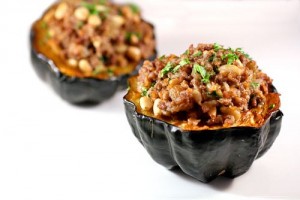
Moroccan-Style Stuffed Acorn Squashes Photo by thebittenword.com via flickr under Creative Commons licenseMost people probably serve acorn squash the way my mother did, but that’s not the only way you can cook this vegetable/fruit.
Roast it and mash it up with potatoes
Stuff it with rice, sausage and savory seasoning — or your favorite other stuffing
Glaze it with citrus such as orange or grapefruit
Season it with rosemary
Pair it with mushrooms, apples or other autumn produce
Puree it into a creamy soup
Cube it and add it to pasta (Mac & Cheese and Acorn Squash anyone?)
Instead of butter and brown sugar, try other ingredients such as mustard and honey
If you do search with the keywords “acorn squash recipes,” you’ll find a wide variety of ways to prepare this seasonal squash.
Changing your eating habits can be tough. But it doesn’t have to be if you take a little time to think it out and create a plan.
This Healthy Eating Worksheet will walk you through the process of creating a healthy eating plan. All you need to do is print it out, set aside some time to complete it, and then fill it out. Then you can create your plan, knowing that you have addressed potential obstacles and came up with some creative ways to handle them.
Photo by
Amber DeGrace, via Flickr under Creative Commons Licence
Photo by Amber DeGrace, via Flickr under Creative Commons Licence
Ingredients:
1 acorn squash
2 Tablespoons butter
2 Tablespoons brown sugar
Directions:
Preheat oven to 400° F.
Cut squash in half from stem to tip. Scoop the seeds and stringy pulp out of the cavities and discard. The insides of the halves should now be smooth. Score the insides in a cross-hatch pattern, with about a half-inch deep cuts.
Place the squash halves cut side up in a roasting pan. Add about 1/4-inch of water over the bottom of the pan. This will help prevent the squash from burning or getting dried out while baking.
Using one tablespoon of butter per half, run the insides to coat. Leave the remaining butter in the halves to melt during cooking.
Crumble a tablespoon of brown sugar into the center of each half.
Bake between an hour and an hour 15 minutes. The tops of the squash halves should be nicely browned, and the flesh should be very soft and cooked through. Remove from the oven and let them cool for a few minutes before serving.
Tip: If you are using unsalted butter, sprinkle with a little salt after rubbing with butter.
Sometimes living organically is just a matter of changing your perspective … or your buying habits. By changing when you buy certain foods (what season) or where you buy them (at a farmer’s market instead of the big-chain grocery store), and you may find that you are not only eating more healthy and nutritious food, but your are saving money on your grocery bill, as well!
Here are five more tips in my Organic Living series that will help you creatively incorporate healthier food into your lifestyle.
1. Buy better beef
Not only do you want to pay attention to what you eat, but if you eat meat, you need to pay attention to what you eat eats, as well. Most “grass fed” beef are still grain finished. Grass-fed beef is more nutritious than grain-fed beef. For 100% grass fed beef, look for a local farm you can buy from. If you’d like information about buying local, grass-fed beef, check out You Can Afford Grass-Fed Beef! – The ultimate guide to saving money by eating high-quality, local meat.
2. Watch the Glycemic Index of your fruit.
Foods on high on the glycemic index (GI) put more sugar into your digestive track and blood stream. This can cause problems whether you’re healthy or have diabetes. And although fruit can be healthy, you want to monitor how much and what kinds you eat. Most fruits have quite a high GI. The exception are berries (including strawberries) which are low GI and very healthy. Here’s a quick list of the top 5 low glycemic fruits:
Low Glycemic Fresh Fruits
Berries (an average of blueberries, strawberries, blackberries, raspberries) – 47 GI, 7g carbs and a glycemic load of 3
2 whole plums – 24 GI, 14g carbs and a glycemic load of 4
1 large peach – 28 GI, 14g carbs and a glycemic load of 4
1 slice of a large cantaloupe – 70 GI, 5g carbs and a glycemic load of 4
1 medium nectarine – 43 GI, 13g carbs and a glycemic load of 5
3. Shop smart for organic produce
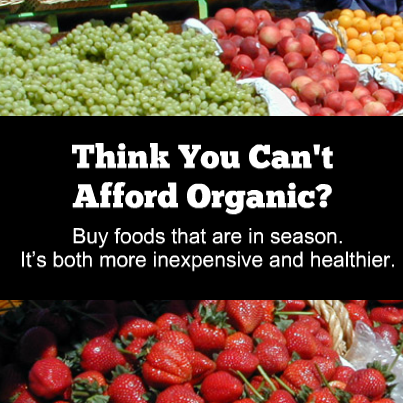
It is a common myth that buying organic is more expensive. I know I’ve often thought, “I’ll buy organic when I make more money.” But this is often a fallacy. If you think you can’t afford organic, try buying foods that are in season. It’s both more inexpensive and healthier. You can find all sorts of inexpensive, fresh and organic produce at your local farmers market.
4. Store food for out of season
Have a favorite seasonal food? Buy it when it’s in season, then freeze it or can it. It’s healthier than buying it out of season. Foods being sold out of season can have a number of things going against them:
They traveled farther to get to you.
They were stored longer.
They many have been treated in order to survive the longer travel and storage time.
All this leads to lower nutritional value of the product, and sometimes an increase in unhealthful qualities, as well.
5. Be careful with seafood.
Eating fish used to be a pretty healthy way to go. However, the aquatic and marine environments are becoming less and less ideal with increasing pollution. There are two ways you can get around this:
Don’t need fish too often, and
Avoid large fish like tuna.
Large fish eat small fish and build up higher concentrations of mercury.
Missed previous posts in this Organic Living series? Check them out here!
Changing your eating habits can be tough. But it doesn’t have to be if you take a little time to think it out and create a plan.
This Healthy Eating Worksheet will walk you through the process of creating a healthy eating plan. All you need to do is print it out, set aside some time to complete it, and then fill it out. Then you can create your plan, knowing that you have addressed potential obstacles and came up with some creative ways to handle them.
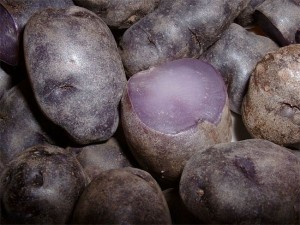
Reduced from a photograph taken 28th January 2004 by Stephen Lea and released under the GFDL by the photographer.
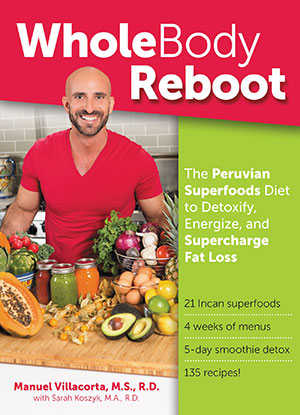
Reduced from a photograph taken 28th January 2004 by Stephen Lea and released under the GFDL by the photographer.I first encountered the purple potato while at a business conference. The buffet lunch provided included baked potatoes medley, which included these deep amethyst curiosities. Then, recently, I received a book to review called Whole Body Reboot, which introduced me to the health benefits of brightly colored foods, including the superfood that is the purple potato.
This week’s featured recipe comes from that book, and inspired me to research what benefits this root vegetable has for us.
The purple color is courtesy of anthocyanin, a flavonoid that has been shown in studies to have anti-cancer and heart-protective effects, the ability to boost the immune system and protect against age-related memory loss. Anthoscyanins may also reduce the risk of Parkinson’s and improve eyesight.
Purple potatoes provide a healthy dose of antioxidants — 4 times as much antioxidants as Russet potatoes and levels equal to kale and spinach — which also help with age-related issues.
What can you do with a purple potato? Pretty much anything you can do with any other type of potato! You can make:
Purple potato salad
Purple hash browns
Country fried purple potatoes
Purple mashed potatoes
The list goes on and on. The only caveat I’d add is that you want to be sure that when you serve it, people know what they’re getting into. The color of food affects people’s reactions to it, so don’t surprise someone with an odd-colored food that might put them off.
[divider]
[one_third] [/one_third]
[two_third_last]
Take Charge of Your Health!
Changing your eating habits can be tough. But it doesn’t have to be if you take a little time to think it out and create a plan.
This Healthy Eating Worksheet will walk you through the process of creating a healthy eating plan. All you need to do is print it out, set aside some time to complete it, and then fill it out. Then you can create your plan, knowing that you have addressed potential obstacles and came up with some creative ways to handle them.
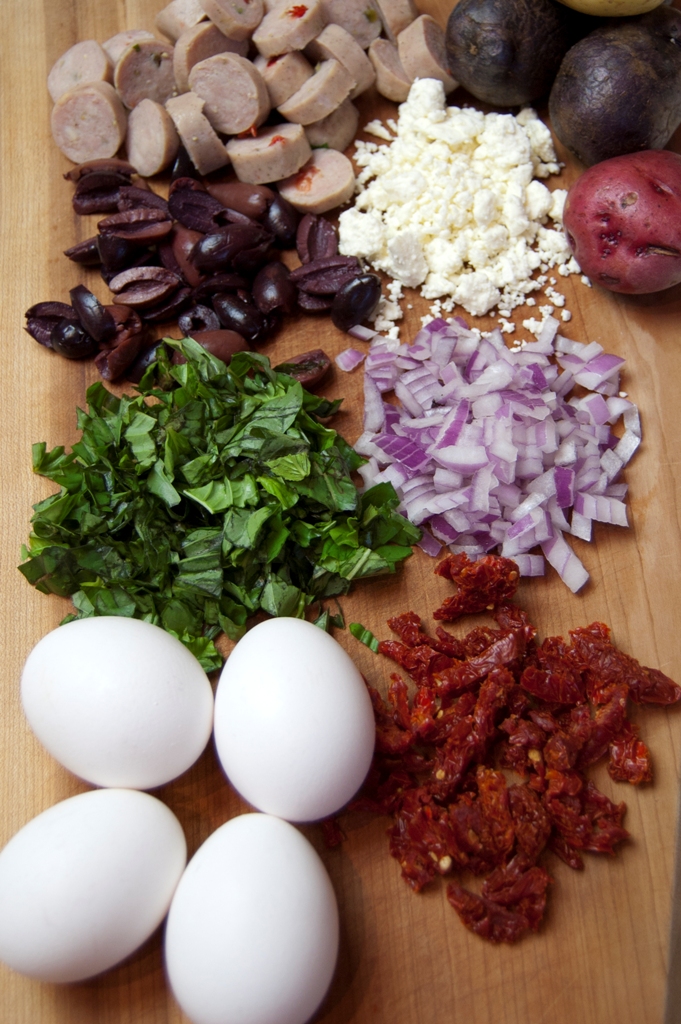
Carma’s Note: The purple potatoes, included in this recipe, are one of many superfoods that pack a lot of nutrition in one simple food. Purple potatoes have two to three times the antioxidants of other potatoes and the plant chemicals that make them purple have numerous health benefits, including anti-cancer and heart-protective effects, as well as a boost for the immune system and protecting against age-related memory loss.
Ingredients:
Oil spray
4 small purple potatoes, but into 1/2-inch thick rounds
Salt
Pepper
1 Tablespoon olive oil
1/3 cup chopped red onion
2 chicken sausages, sliced
1/4 cup sliced sun-dried tomatoes, re-hydrated
1/4 cup sliced Katamata olives
1/4 cup crumbled feta cheese
1/3 cup chopped basil
Directions:
Preheat the oven to 400° F. Lightly spray a sheet pay with oil.
Place the potato rounds on the sheet pan and season with salt and pepper to taste. Bake until tender, for 30 to 40 minutes.
While the potatoes are baking, make the scramble. Heat the oil in a large saut´ pan over medium heat. When the oil is hot, add the onion and saut´ until softened, for about 5 minutes.
Add the sausage, tomatoes and olives. Saut´ until the sausage is cooked through. Turn off the heat and toss with the feta cheese and basil. Serve warm over the roasted potatoes.
“Health is not a diet plan, but a lifestyle. Understand your body, your strengths, and your limits and use this knowledge to make a change. Stop dieting, start living.” ~ Manuel Villacorta
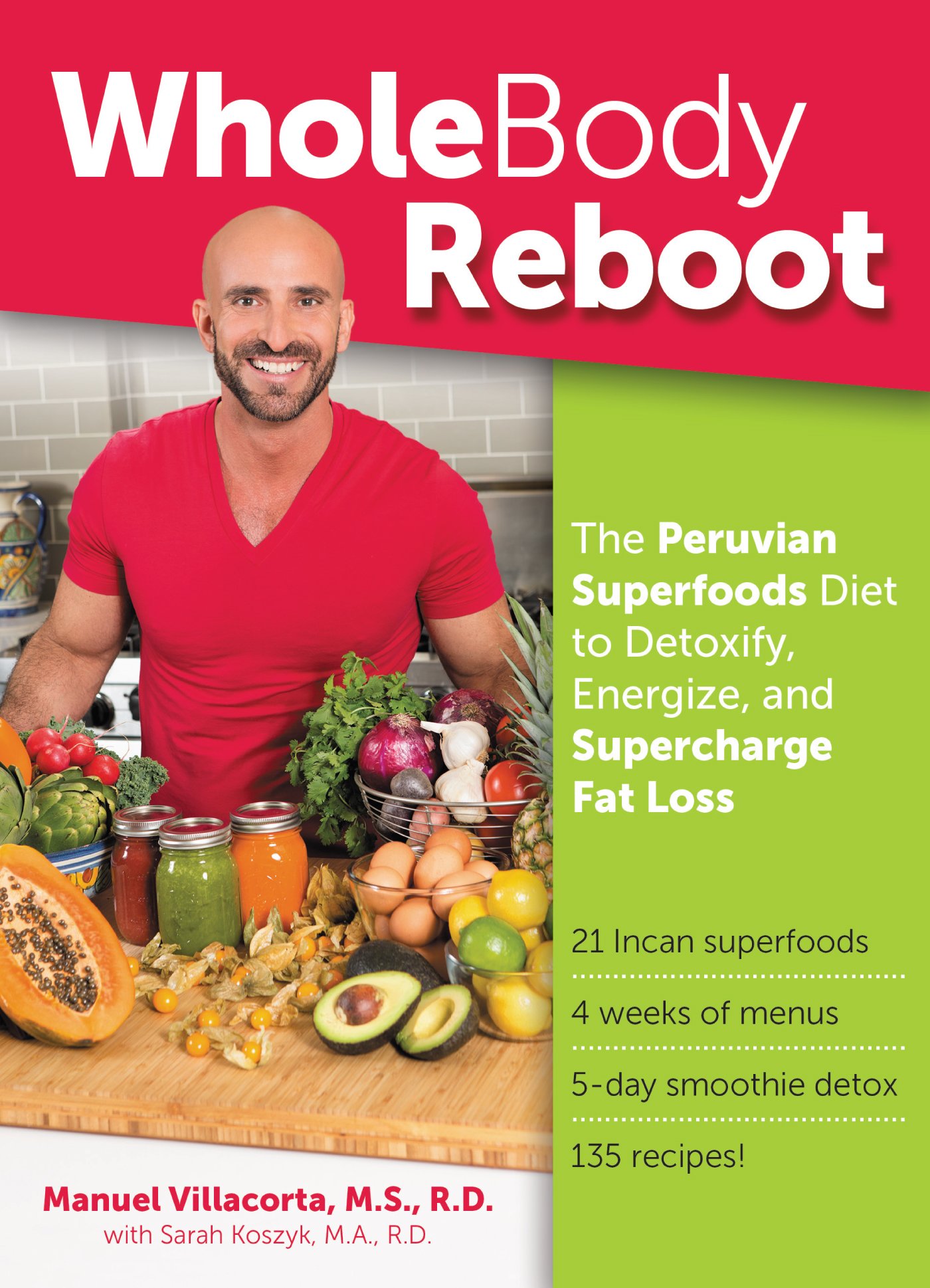
For 20 years, Manuel Villacorta has been helping people improve their life with Peruvian power foods. Now, because of demand increases, these beneficial superfoods are becoming easier to find in supermarkets. This is why he has decided to come out with his new book, Whole Body Reboot: The Peruvian Super Foods Diet to Detoxify, Energize, and Supercharge Fat Loss (HCI Books).
I’ve been given a review copy and will be writing about my experiences reading it and testing out some of the recipes starting next month. However, in the meantime, I was able to get him to answer a few questions about his book hand his philosophy around eating like a Peruvian.
Manuel Villacorta: There are many definitions of superfoods, and although there is no scientific definition, I define superfoods as hardworking functional foods that far surpass basic nutritional content. They are, quite simply, the cleanest, most powerful, antioxidant-rich, phytonutrient-rich and anti-aging foods available anywhere. And many of these nutrient-rich ingredients happen to come from South America, and more specifically Peru.
CS: Speaking of Peru, what is special about eating like a Peruvian … and why haven’t more Americans heard of this style of cuisine?
MV: Eating like a Peruvian from Lima is very different from eating like someone who is Andean or Amazonian. While the cuisine from Lima has fallen into a very westernized pattern, those from the Andes and Amazon regions have been eating the same foods for hundreds of years. However, only recently has the research on native foods such as lacuma, pichuberries and camu camu, to name a few, surfaced. American aren’t familiar with adopting such a diet because the research is still new.
[one_third] Lacuna “Canistel-2” by Jim Conrad – JIM CONRAD’S NATURALIST NEWSLETTER. Written in the community of 28 de Junio and issued from a ciber 8 kms to the west in Pujiltic, Chiapas, MÉXICO. Licensed under Public Domain via Commons [/one_third][one_third] Pichuberry Image from Arizona Herb Association via flickr.com under Attribution 2.0 Generic (CC BY 2.0) [/one_third][one_third_last] Camu Camu “Camucamu seeds”. Licensed under Public Domain via Commons [/one_third_last]
CS: If this research is so new, what inspired you to develop Whole Body Reboot now?
MV: I began this approach to weight loss and lifestyle change with my clients, incorporating Peruvian superfoods into their everyday lives. The smoothie plan is how I start all of my willing participants and those who give it a try immediately reap the benefits. This book’s purpose is to spread this lifestyle regime, marrying the ideas of home-cooking and health.
CS: The book talks about a detox reboot. What does that mean? How is it different that the many detox programs people are more familiar with?
MV: The difference between the two terms, to me, is that detox claims the removal of unwanted chemicals in the body; while reboot suggests the feeling your body experiences when you give it a break from the constant stress we put onto our bodies through the food choices we make.
My 5-day reboot plan consists of five smoothies with different colored fruits and vegetables featured each day so that your body receives the widest array of nutrients while revitalizing the cells. By giving your body these much-needed nutrients, you will begin to feel cleaner, more focused, and you will lose weight.
Given that no one food, herb or remedy has the ability to cure ailments or disease, nor does it have the ability to ‘detox’ the body (that’s the liver’s job), I have followed the reboot with several customized and delicious Peruvian-inspired 7-day meal plans that you mix and match to your tastes and needs, whether you are male or female, an omnivore, vegetarian or vegan, or you follow a gluten-free lifestyle.
CS: Are all the recipes in your book Peruvian?
MV: No. The recipes all contain Peruvian superfoods, but each recipe is inspired by a variety of cuisines. Some are Peruvian, some are Thai, and much more are American-influenced. For instance, I recreated a waffle recipe into sweet potato waffle. I take traditional foods and make them more flavorful and healthier.
CS: You mention sweet potato, which is one of the 21 superfoods. It is so simple, I find it surprising that it is a superfood. Will other superfoods be surprising?
MV: Absolutely! Although many of these foods were presented in my last book, Peruvian Power Foods, I have added potent guests to this list, hoping to enlighten the American public of a wider array of nutrients. However unique and unfamiliar the food, I decided to stick to foods that were attainable in the United States.
For example, while pichuberry is still very new here in the U.S., it can now be purchased in mainstream markets like Bristol Farms, Safeway, Whole Foods and Vons in California, Arizona, and Nevada. It can also be purchased online and shipped anywhere in the country. The pichuberry is possibly one of the greatest superfruits available in the United States.
CS: Since you start Whole Body Reboot with a detox and provide meal plans, would you consider it a diet book?
MV: No, my book is not a diet book, and it is definitely not a fad or a gimmick. This book is more so a lifestyle approach to sustainable, long-term health. It gives my readers the ability to develop skills and knowledge that will help carry them on through the years, in the most independent way.
CS: Why should someone pick up a copy of your book over other Peruvian cookbooks?
MV: Not only do I offer 135 recipes, but I offer individualized 7-day meal plans that the reader can pick and choose from. I also provide health advice, given that I am much more of a dietitian than a cook. I tell the reader why eating these foods are beneficial, not just how to cook them. However, just because I am a dietitian does not mean I kill flavor for health. Rather, I marry the two and this book is their journey together.
[divider]
[one_third] [/one_third]
[two_third_last]
Take Charge of Your Health!
Changing your eating habits can be tough. But it doesn’t have to be if you take a little time to think it out and create a plan.
This Healthy Eating Worksheet will walk you through the process of creating a healthy eating plan. All you need to do is print it out, set aside some time to complete it, and then fill it out. Then you can create your plan, knowing that you have addressed potential obstacles and came up with some creative ways to handle them.
By zernova via deviantart.comEating is an integral part of life. Your body gets the nutrients it needs to function from food. However, sometimes we can go overboard with our eating habits and that can result in weight gain.
One common issue with overboard eating is emotional eating. This type of eating may affect the results on the scale, but it all begins in the mind.
Emotional Trigger => Comforting but Unhealthy Eating Choice
Everyone has good days and bad days. How we deal with the bad ones brings emotional eating into play. You look for comfort for your emotional pain. People who turn to food for comfort find a coping mechanism that won’t judge them, hurt them or tell them “no.” To complicate this issue, eating pleasurable foods can stimulate the release of endorphins, just like smiling, laughing and exercise. Endorphins are “feel good” chemicals that are released into our brains. Therefore, after you eat, you feel better.
Emotional eaters use food to relieve stress. They hide behind the food instead of seeking solutions to the problems. This is not uncommon when the stressor is something horrible such as physical abuse or a death. But the trigger can be anything that causes mental discomfort, from overwhelming to things not going according to plan.
But, how do you know you are using food as a crutch?
The first sign is obvious: You will gain weight if you eat too much. In light of the weight gain, examine other areas of your life:
Have you been under stress lately at work or at home?
Has anything traumatic happened in the last year?
Are you dealing with a problem but haven’t found a solution?
Answering “yes” to any of these questions could mean that your weight gain is, at least in part, caused by emotional eating. You eat but you are not necessarily hungry at the time. The foods that you choose are what we term “comfort foods.” They are different for each person because comfort food is often associated with a pleasant memory. However, there are some common qualities of comfort food across the board. Comfort foods often:
Are high in fat, such as French fries, fried foods, etc.
Are high in carbs, like macaroni and cheese, mashed potatoes, etc.
Are high is sugar content, such as ice cream, donuts, cookies, cake, etc.
What can you do to curb emotional eating? The first step is recognizing that you have a problem. You may experience feelings of helplessness and guilt. The guilt is over potentially ruining your health or sabotaging your weight loss efforts, and the helplessness lies in the fact that you don’t see a way out.
Once you recognized the problem, seek help. There are many types of counselors and coaches out there that can help you with emotional eating. This unhealthy habit has nothing to do with dieting or changing your eating habits. It has everything to do with gaining control over your emotions.
A counselor might suggest techniques like visualization, practicing problem-solving skills, relaxation techniques and family support. Visualization helps you to see your problems in a realistic way and not blow them out of proportion. You will also learn to see food as nutrition for the body and not an emotional crutch.
Finally, your family and friends can learn your triggers for stress and be on the lookout for changes in your eating habits. They can help you be aware of the foods you are eating, assist you in making healthy food choices and exercise along with you. Proper diet and exercise increase immunity, blood flow and positive thinking. Yoga enhances the mind/body connection so you don’t eat when you aren’t hungry.
Finding new ways to solve your problems and deal with stress will push food out of the equation. You’ll feel good about finding solutions which will replace the dependence on food.
DIY Resources for Overcoming Emotional Eating
[one_third]
Stop Eating Your Heart Out: The 21-Day Program to Free Yourself from Emotional Eatingby Meryl Hershey Beck
More books about emotional, stress and binge eating are available on Amazon.com
[divider]
[one_third] [/one_third]
[two_third_last]
Take Charge of Your Health!
Changing your eating habits can be tough. But it doesn’t have to be if you take a little time to think it out and create a plan.
This Healthy Eating Worksheet will walk you through the process of creating a healthy eating plan. All you need to do is print it out, set aside some time to complete it, and then fill it out. Then you can create your plan, knowing that you have addressed potential obstacles and came up with some creative ways to handle them.


 [/one_third]
 [/two_third_last]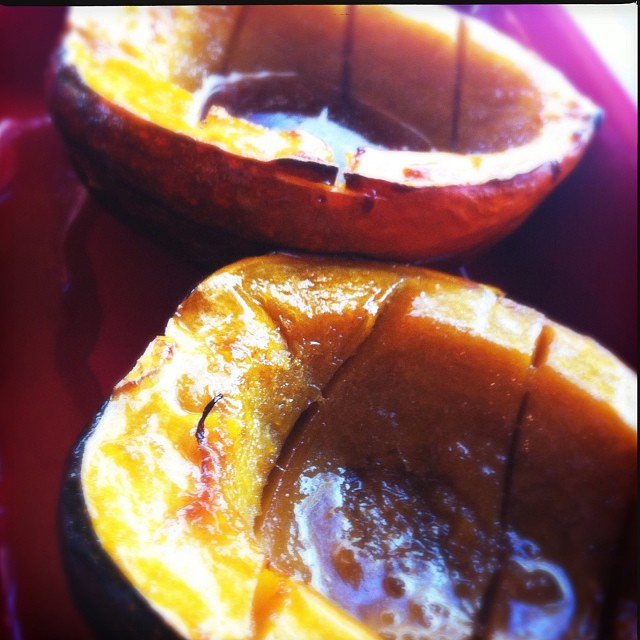
 Sometimes living organically is just a matter of changing your perspective … or your buying habits. By changing when you buy certain foods (what season) or where you buy them (at a farmer’s market instead of the big-chain grocery store), and you may find that you are not only eating more healthy and nutritious food, but your are saving money on your grocery bill, as well!
 1. Buy better beef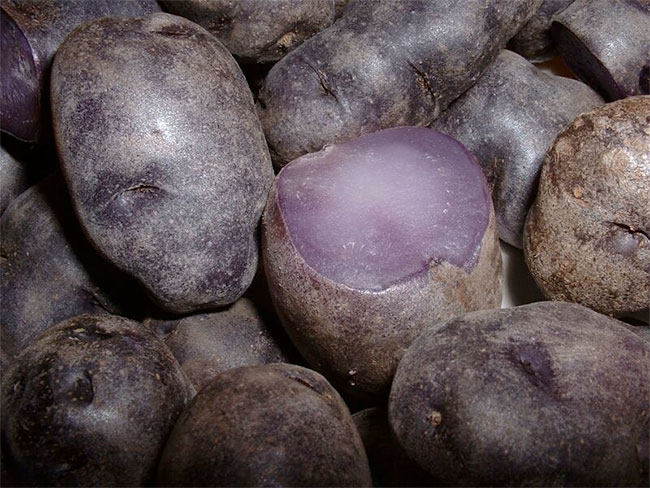
 “Health is not a diet plan, but a lifestyle. Understand your body, your strengths, and your limits and use this knowledge to make a change. Stop dieting, start living.”