Categories
Recipes

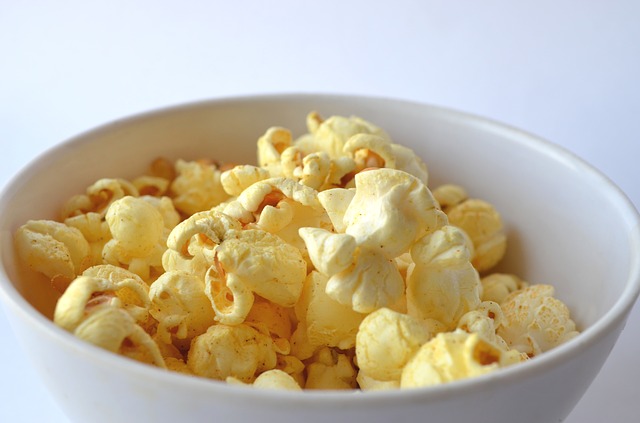
Popcorn Salad

Here’s an unusual salad that you can bring to buffets or serve with a weekend BBQ. It is surprisingly good and people will enjoy the whimsical flavors.

popcorn
Public domain image via pixabay.com.

Ingredients:

  • 10 slices bacon
  • ¾ cup mayonnaise
  • 1 cup diced celery
  • 1-¼ cups shredded Cheddar cheese, divided (1 cup and ¼ cup)
  • 1 8-oz can sliced water chestnuts, drained
  • ¼ cup shredded carrots
  • 2 Tablespoons minced fresh chives
  • 6 cups popped popcorn

Directions:

  1. Place bacon in a large, deep skillet. Cook over medium high heat until evenly browned. Drain and crumble. Set aside. NOTE: It might be easier and faster to cook the bacon if you cut the strips in half before cooking.
  2. In a large bowl, combined the mayonnaise, celery, water chestnuts, carrots, chives, 1 cup cheese and ½ cup bacon. Mix well.
  3. NOTE: Complete this step that last minute, otherwise the popcorn will become soft and not as tasty. This dish does not make good leftovers! Add popcorn and stir to coat. Sprinkle in remaining ¼ cup cheese and the rest of the bacon. Serve immediately.

Source: My fiancée’s mother

Categories
Recipes

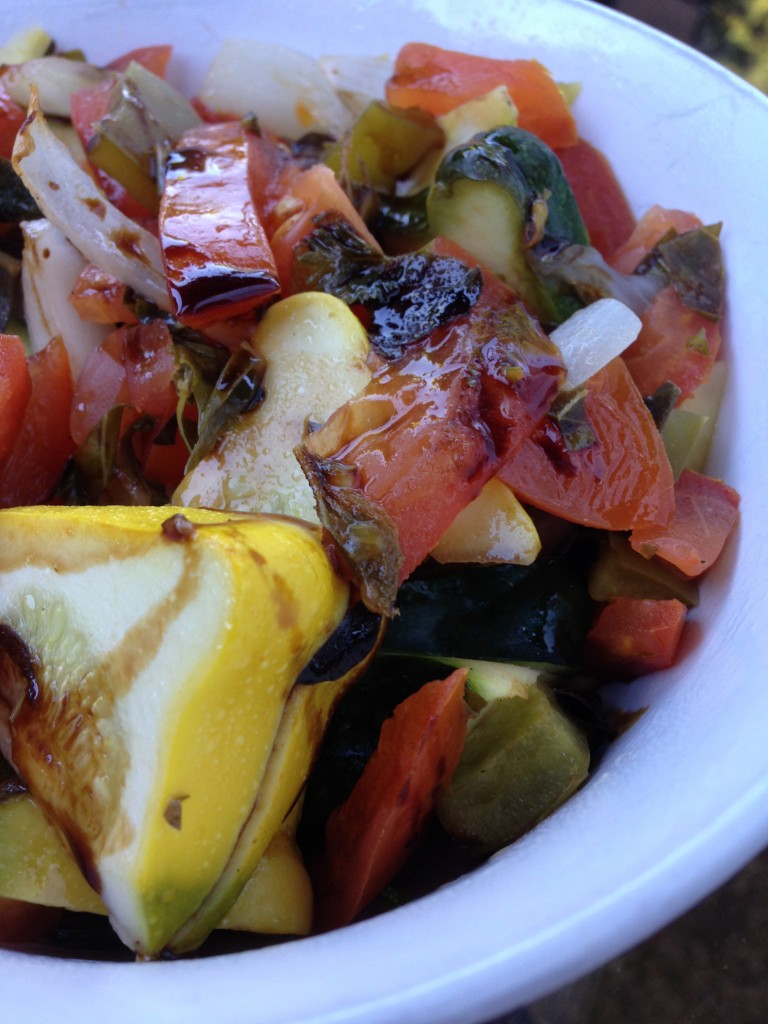
Simple and Delicious Vegetarian Dinner

If you’re looking for a meatless meal that satisfies, look no further. This isn’t exactly a recipe, but is meant to inspire you for our next veggie-only dish.

Ingredients:

  • Chopped fresh vegetables
  • Chopped fresh herbs, such as basil, parsley and oregano
  • Olive oil

Directions:

  1. Preheat your oven to 350°F.
  2. Chop up some veggies, herbs and toss them in some olive oil.
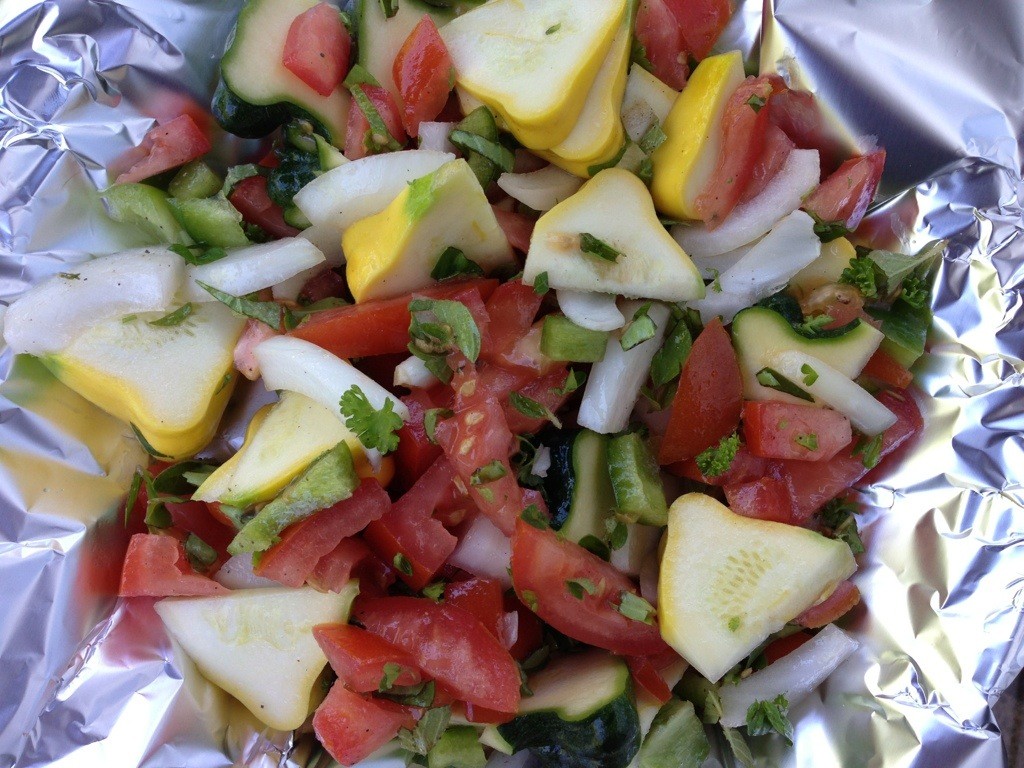
  3. Mix all your ingredients and wrap everything in foil on a baking dish. Bake at 350°F for about 40 minutes or so.
  4. Drizzle with your favorite balsamic reduction and serve over rice, quinoa or just have it by itself.

veggie dinner
Here pattypans, peppers, onions and tomatoes are used, but mushrooms, eggplant, garlic and plenty of other veggies also work well.

Categories
Flavor Blending Recipes

Creative — and Quick! — Pink Sauce

creative-cooking-tips

pink sauceA few weeks ago, I was at a party where bow-tie pasta with mushrooms and pink sauce was served. It was incredibly delicious. So, I went into research mode to find out how to make pink sauce myself.

Turns out, it is pretty much marinara sauce with added cream.

That gave me the idea for last night’s meal. I purchased a small container (one pind) of whipping cream and mixed it into a jar of basic marinara sauce.

Voila! Very tasty results.

I also sautéd some onion, garlic and mushrooms. Tossed that with bow-tie pasta and mixed in my off-the-cuff pink sauce. Dinner took about 30 minutes to make and it was a hit!

pink-sauce-close

This is what Kitchen Creativity is all about … using simple skills you currently have, with simple ingredients that are easy to buy, to create meals that taste like those made by a fancy, shmancy chef!

Have you recreated restaurant fare in your kitchen? Please share in a comment below.

Categories
Healthy Living

Organic Living: Farm Fresh Foods

Ann Arbor August 2013 24 (Farmer's Market)
Photo by Michael Barera
[CC BY-SA 4.0, CC BY-SA 3.0 or GFDL],
via Wikimedia Commons
One of the best ways to live organically is to buy farm fresh foods. The best way to do that is to frequent you local farmer’s markets. Here is Long Beach, Calif., we have several and one is being held somewhere within 10-15 miles of my home almost every day of the week!

So why not look up and remember when your local farmer’s markets are? They’re often cheaper than the grocery store, and you can ask directly about how the food was grown. Why would you do that? Well, not all food has to be labeled “Organic” to be healthy. And, there are different levels of “organic.” If you’re buying directly from the farmer, you can ask how it was made and make more educated purchasing decisions.

Want to save even more money at the farmer’s market? Stay to the end — they’ll often give out last minute deals to clear out inventory.

What if you don’t have a local farmer’s market, or it occurs at an inconvenient time? There are now alternatives to trekking out to get fresh produce. You can now sign up for your local fruit or veggie boxes. Farmers will deliver fresh organic produce straight to your door. Even some national companies offer such services that deliver local foods, too. Here are some services to check out:


Missed previous posts in this Organic Living series? Check them out here!

[divider]

[one_third] Healthy Eating Worksheet [/one_third]
[two_third_last]

Take Charge of Your Health!

Changing your eating habits can be tough. But it doesn’t have to be if you take a little time to think it out and create a plan.

This Healthy Eating Worksheet will walk you through the process of creating a healthy eating plan. All you need to do is print it out, set aside some time to complete it, and then fill it out. Then you can create your plan, knowing that you have addressed potential obstacles and came up with some creative ways to handle them.

Download Now [/two_third_last]

Categories
Healthy Living Well Stocked Pantry

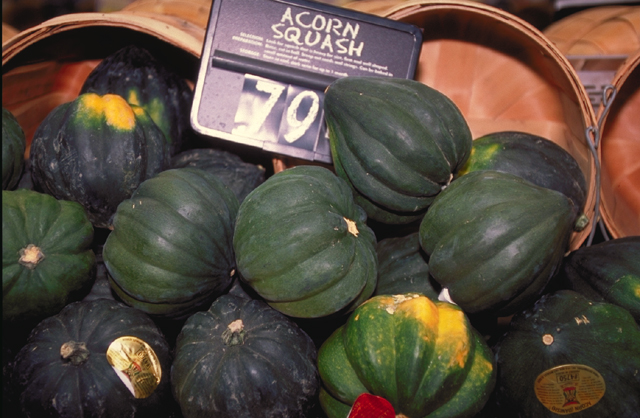
The Benefits of Acorn Squash

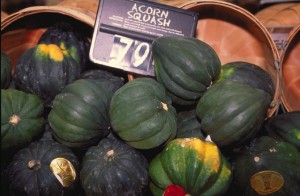
Acorn squash
Public domain image from the United States Department of Agriculture via Wikimedia Commons.
One of my favorite side dishes when I was growing up was acorn squash. My mother would bake it and then serve it with melted butter and brown sugar. Yum!

In honor of National Acorn Squash Day, which is today, I thought I’d share information about this hearty fall vegetable that can be so versatile.

Although like other winter season squashes, such as the pumpkin, it has a firm outer shell … kind of like a gourd … it is actually related to the summer squashes, such as zucchini and yellow crookneck squash.

Acorn squashes provide a decent amount of nutrition. They contain vitamin A, niacin, folate, thiamine and vitamin B-6. In addition, a 1/2-cup serving of cooked, cubed acorn squash provides approximately 20% of the recommended daily allowance of vitamin C for healthy adults following a 2000-calorie diet. Of course, how much vitamin C you receive from your serving depends on how your prepare it.

If you want to get the most vitamin C out of your acorn squash, use it 3-4 days after purchase and cut it just before cooking. Also, steam or bake it — boiling will leach the vitamin C out into the water.

Acorn squash is also a good source of potassium and magnesium. That same 1/2-cup serving provides 13% of the recommended daily allowance (RDA) of potassium and 11% of magnesium.

Acorn squash provides fiber and antioxidants, as well.

Given its nutritious content, acorn squash is able to impart several health benefits:

  • Its Vitamin C helps boost your immune system
  • Its Vitamin A helps improve vision and contributes to good skin
  • Its fiber help regulate digestion, blood sugar and cholesterol
  • Its potassium helps to regulate the fluid balance in the cells and tissues, thus helping with blood pressure. These effects are strengthened by its magnesium content, which regulates the uptake of potassium

creative-cooking-tips

Moroccan-Style Stuffed Acorn Squashes
Photo by thebittenword.com via flickr under Creative Commons license
Most people probably serve acorn squash the way my mother did, but that’s not the only way you can cook this vegetable/fruit.

  • Roast it and mash it up with potatoes
  • Stuff it with rice, sausage and savory seasoning — or your favorite other stuffing
  • Glaze it with citrus such as orange or grapefruit
  • Season it with rosemary
  • Pair it with mushrooms, apples or other autumn produce
  • Puree it into a creamy soup
  • Cube it and add it to pasta (Mac & Cheese and Acorn Squash anyone?)
  • Instead of butter and brown sugar, try other ingredients such as mustard and honey

If you do search with the keywords “acorn squash recipes,” you’ll find a wide variety of ways to prepare this seasonal squash.


Sources:

[divider]

[one_third] Healthy Eating Worksheet [/one_third]
[two_third_last]

Take Charge of Your Health!

Changing your eating habits can be tough. But it doesn’t have to be if you take a little time to think it out and create a plan.

This Healthy Eating Worksheet will walk you through the process of creating a healthy eating plan. All you need to do is print it out, set aside some time to complete it, and then fill it out. Then you can create your plan, knowing that you have addressed potential obstacles and came up with some creative ways to handle them.

Download Now [/two_third_last]

Categories
Recipes

Traditional Baked Acorn Squash

Baked Acorn Squash
Photo by
Amber DeGrace, via Flickr under Creative Commons Licence

Ingredients:

  • 1 acorn squash
  • 2 Tablespoons butter
  • 2 Tablespoons brown sugar

Directions:

  1. Preheat oven to 400° F.
  2. Cut squash in half from stem to tip. Scoop the seeds and stringy pulp out of the cavities and discard. The insides of the halves should now be smooth. Score the insides in a cross-hatch pattern, with about a half-inch deep cuts.
  3. Place the squash halves cut side up in a roasting pan. Add about 1/4-inch of water over the bottom of the pan. This will help prevent the squash from burning or getting dried out while baking.
  4. Using one tablespoon of butter per half, run the insides to coat. Leave the remaining butter in the halves to melt during cooking.
  5. Crumble a tablespoon of brown sugar into the center of each half.
  6. Bake between an hour and an hour 15 minutes. The tops of the squash halves should be nicely browned, and the flesh should be very soft and cooked through. Remove from the oven and let them cool for a few minutes before serving.

Tip: If you are using unsalted butter, sprinkle with a little salt after rubbing with butter.


Recipe Inspired by: My mom, Classic Baked Acorn Squash and Baked Acorn Squash with Brown Sugar and Butter.

Categories
Healthy Living

Organic Living: Change your buying habits

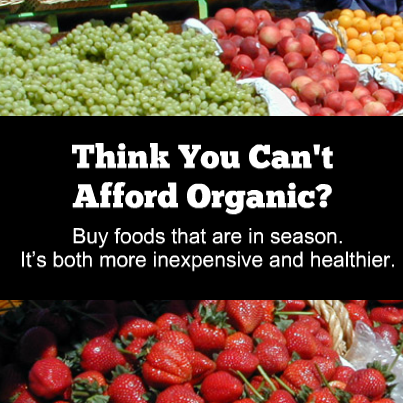
Buy foods that are in seasonSometimes living organically is just a matter of changing your perspective … or your buying habits. By changing when you buy certain foods (what season) or where you buy them (at a farmer’s market instead of the big-chain grocery store), and you may find that you are not only eating more healthy and nutritious food, but your are saving money on your grocery bill, as well!

Here are five more tips in my Organic Living series that will help you creatively incorporate healthier food into your lifestyle.


1. Buy better beef
Not only do you want to pay attention to what you eat, but if you eat meat, you need to pay attention to what you eat eats, as well. Most “grass fed” beef are still grain finished. Grass-fed beef is more nutritious than grain-fed beef. For 100% grass fed beef, look for a local farm you can buy from. If you’d like information about buying local, grass-fed beef, check out You Can Afford Grass-Fed Beef! – The ultimate guide to saving money by eating high-quality, local meat.

2. Watch the Glycemic Index of your fruit.
Foods on high on the glycemic index (GI) put more sugar into your digestive track and blood stream. This can cause problems whether you’re healthy or have diabetes. And although fruit can be healthy, you want to monitor how much and what kinds you eat. Most fruits have quite a high GI. The exception are berries (including strawberries) which are low GI and very healthy. Here’s a quick list of the top 5 low glycemic fruits:

Low Glycemic Fresh Fruits

  • Berries (an average of blueberries, strawberries, blackberries, raspberries) – 47 GI, 7g carbs and a glycemic load of 3
  • 2 whole plums – 24 GI, 14g carbs and a glycemic load of 4
  • 1 large peach – 28 GI, 14g carbs and a glycemic load of 4
  • 1 slice of a large cantaloupe – 70 GI, 5g carbs and a glycemic load of 4
  • 1 medium nectarine – 43 GI, 13g carbs and a glycemic load of 5

3. Shop smart for organic produce
It is a common myth that buying organic is more expensive. I know I’ve often thought, “I’ll buy organic when I make more money.” But this is often a fallacy. If you think you can’t afford organic, try buying foods that are in season. It’s both more inexpensive and healthier. You can find all sorts of inexpensive, fresh and organic produce at your local farmers market.

4. Store food for out of season
Have a favorite seasonal food? Buy it when it’s in season, then freeze it or can it. It’s healthier than buying it out of season. Foods being sold out of season can have a number of things going against them:

  • They traveled farther to get to you.
  • They were stored longer.
  • They many have been treated in order to survive the longer travel and storage time.

All this leads to lower nutritional value of the product, and sometimes an increase in unhealthful qualities, as well.


5. Be careful with seafood.
Eating fish used to be a pretty healthy way to go. However, the aquatic and marine environments are becoming less and less ideal with increasing pollution. There are two ways you can get around this:

  • Don’t need fish too often, and
  • Avoid large fish like tuna.

Large fish eat small fish and build up higher concentrations of mercury.


Missed previous posts in this Organic Living series? Check them out here!

[divider]

[one_third] Healthy Eating Worksheet [/one_third]
[two_third_last]

Take Charge of Your Health!

Changing your eating habits can be tough. But it doesn’t have to be if you take a little time to think it out and create a plan.

This Healthy Eating Worksheet will walk you through the process of creating a healthy eating plan. All you need to do is print it out, set aside some time to complete it, and then fill it out. Then you can create your plan, knowing that you have addressed potential obstacles and came up with some creative ways to handle them.

Download Now [/two_third_last]

The owner of this website has made a commitment to accessibility and inclusion, please report any problems that you encounter using the contact form on this website. This site uses the WP ADA Compliance Check plugin to enhance accessibility.