Categories
Healthy Living

Do you know what “organic” really means on the label?

US Organic Food Producers Ought to Better Educate US Consumers

I have a friend who is really strict with her diet due to some health problems she has. This weekend, we had a discussion on what “organic” means on U.S. food labels, how misleading that label can me, and about organic foods in general. Some insightful research published through ReportLinker and developed by the HPS Food Group indicates that the usual U.S. buyer of organic food products, whether frequently or infrequently buying, doesn’t fully understand what protocols those products go through for USDA certification or what the word “organic” really indicates.
Do you know what organic really means on the label?

What “Organic” Really Indicates

For a food product to carry the description “organic” on its labeling, it has to have been made in accordance with strict protocols which were first put in place by the USDA in 2002. “Organic” does not necessarily mean that a product is 100% organic; it does, however, indicate that it’s a minimum of 95% organic. “Organic” is not the same thing as the (labeling-wise) undefined word “natural” used in food labeling. (“Natural” simply tends to mean predominantly free of artificial ingredients.)

A farm or food manufacturer must be certified by an agent from the USDA’s NOP (National Organic Program) to be permitted to label its product “organic.” For that business to continue putting “organic” on its labels, it must be inspected and recertified by NOP each year. Imported foods to the US labeled “organic” have to meet the same standards; if it’s found that an imported food doesn’t meet them, then it’s producer will be told to remove the “organic” label or face prosecution from the USDA’s attorneys.

A Growing Demand for Organic Foods
organic foodsFrom 2002 through 2016, the number of certified organic foods producers in the US grew by 237%. The total amount of land now devoted to growing crops organically in the US has reached more than 4.36 million acres (6800 square miles), an amount of land more than double that comprising the state of Delaware.

Cultivated lands certified as devoted to organic food production are forbidden from having any synthetic chemical pesticides used or GMO crops grown on them. However, naturally-occurring pesticides and pest control methods are used. What’s more, crops made through the process of mutagenesis are also grown on these lands.

From 2005 through 2015, the sale of organic food products in the US grew by more than 200%. This rate of growth far outpaces that of total food product sales (31%) in spite of organic foods being significantly more expensive, which shows how important organic eating has become to a great many American households. In fact, if the organic food industry were, itself, a single corporation, it would now be featured on the US Fortune 100 list of companies.

Ultimately, food consumers in the US believe that food producers, rather than the government, the media, or consumers themselves, ought to shoulder the responsibility of making it clear and easy to understand exactly what “organic” labeling means. With Americans obviously hungry for more organic foods, it would be in the best interests of organic food producers to make a stronger push to educate US food consumers.

In the meantime, you can educate yourself with the resources listed below. Or you can try your hand at growing your own organic vegetables.


Save

[divider]

[one_third] Healthy Eating Worksheet [/one_third]
[two_third_last]

Take Charge of Your Health!

Changing your eating habits can be tough. But it doesn’t have to be if you take a little time to think it out and create a plan.

This Healthy Eating Worksheet will walk you through the process of creating a healthy eating plan. All you need to do is print it out, set aside some time to complete it, and then fill it out. Then you can create your plan, knowing that you have addressed potential obstacles and came up with some creative ways to handle them.

Download Now [/two_third_last]

Categories
Healthy Living

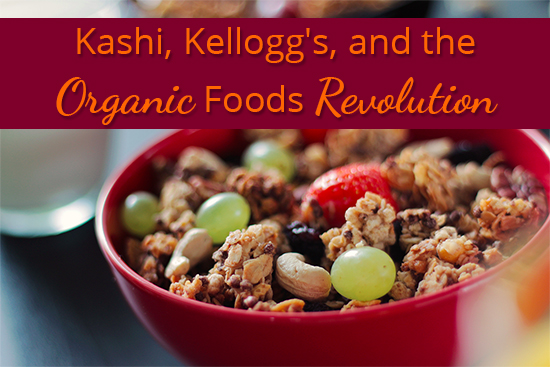
Kashi, Kellogg’s, and the Organic Foods Revolution

Did you know that a small, entrepreneurial, husband-and-wife team launched the organic foods revolution? According to research done by the NYU Stern School of Business, Center for Sustainable Business, people in the US can give thanks for the explosive growth of the organic foods industry to Kashi. This post is based on a report based on that research by ReportLinker.

Kashi, Kellogg's, and the Organic Foods Revolution

Kashi and the Start of the Organic Foods Revolution

If you’re a US resident like me, you have most likely seen Kashi’s cereals in your local supermarket or grocery store. I tried one several years ago and, alas, didn’t like it. But I’ve heard their taste is much improved.

Anyway, the Kashi company was founded in southern California in 1984 by the Philip and Gayle Tauber. The Taubers were disappointed in the nutritional quality of most breakfast cereals of the time. So, they set out to offer a healthier, but still tasty, alternative choice. Their whole grain products were high in protein. And they avoided artificial ingredients.

By the year 2000 annual sales had reached $25 million. It was at that time that the Taubers sold their company to Kellogg’s.

Kashi was a very small company compared to the $7 billion per year Kellogg’s, a longtime giant in the cereal manufacturing and marketing industry. But Kellogg’s North American division president, John Cook, said of the acquisition, “Kashi will enhance our leadership position in the RTEC (ready-to-eat cereal) category and further extend our commitment to build our consumer base in the rapidly growing natural foods marketplace.”

Kellog’s Cashes in on the Organic Foods Revolution

Cook knew what he was talking about. By 2010, Kellogg’s independently managed Kashi brand was bringing in $600 million in annual sales, nearly five percent of Kellogg’s total revenues. But, also by 2010, the quest for more nutritious food products had evolved from its mid-1980s origins to include a lot more people, and they were equally concerned about environmental and human health risks posed by synthetic pesticides used in crops.

People wanted “natural” foods, but the word “natural” on US food product labels had no strict definition, and there was no strict protocol for having food manufacturers be lawfully permitted to describe their ingredients as “natural”. However, this dilemma would be addressed because of the introduction of GMO (genetically modified organism) food products in the mid-1990s.

GMO Pushes the Issue Front of Mind

In 1996, agricultural chemicals giant Monsanto began commercially selling GMO seeds. These seeds had been genetically altered such that the plants grown from them were resistant to Monsanto’s powerful synthetic glyphosate herbicide, trademarked RoundUp. As a result, farmers began liberally spraying these GMO crops with a lot of RoundUp, to more effectively kill the plant-killing weeds. As the weeds became more resistant over time, farmers increased the volume of spraying. Thus, GMO crops were getting to consumers with significantly higher concentrations of synthetic pesticide residue, a clear health risk.

As an aside, I’ve been following the “Frankenfood” story for decades. It is filled with fascinating twists and turns, with proponents on both sides having valid points. But that is another post…

In 2002, the USDA established a strict protocol for the production of food products to be lawfully labeled “organic”, which was clearly defined as being at least 95% organic. Synthetic pesticides could not be used, outlined practices to keep the soil healthful and regenerated had to be followed, and GMOs were forbidden. “Organic” came to be synonymous with “natural.“

Kashi Was there at the Beginning

But the roots of this revolution had been with the private Kashi company from the start. Kashi had developed its own organic certification program, trademarked Veri-Pure, overseen by an independent testing organization. In 2002, it was Kellogg’s Kashi brand which produced the first line of USDA Organic Certified cereals.

By 2015, according to Consumer Reports, “Around eight in 10 households currently buy at least some certified organic products — mostly produce and dairy.” And in spite of the continuation of obstacles to getting organic food products — including significantly higher prices, a fragmented and subdivided market, and persistent labeling confusion (“natural” still has no strict definition, for instance) — while total US food sales grew 3% in 2015, organic foods sales grew 11%.


[divider]

[one_third] Healthy Eating Worksheet [/one_third]
[two_third_last]

Take Charge of Your Health!

Changing your eating habits can be tough. But it doesn’t have to be if you take a little time to think it out and create a plan.

This Healthy Eating Worksheet will walk you through the process of creating a healthy eating plan. All you need to do is print it out, set aside some time to complete it, and then fill it out. Then you can create your plan, knowing that you have addressed potential obstacles and came up with some creative ways to handle them.

Download Now [/two_third_last]

Categories
Special Occasions

Finding Inspiration For Your Next Big Banquet

Some people love the idea of being able to put on a great meal for their friends, creating an atmosphere of companionship over delicious food, while enjoying each other’s company and socializing. Back in the 1990s, before I got married the first time, I used to have monthly dinner parties. My most memorable meal was the Indian dinner … I’ll never make naan by hand again, but it’s nice to say I had the experience.

Anyway, people work very hard on this sort of event for their friends, pouring their time, energy and love into it. But, without the right inspiration, it can be hard to plan this out. With my parents and in-laws coming to Thanksgiving dinner, this sort of event is on my mind. So, to help you (and me) plan out a fitting banquet for friends and family, this post will go through some of the different places you can go when you’re looking for the right ideas for your meal.

Finding Inspiration For Your Next Big Banquet
(Image Credit)

Banquet Idea #1: Set a Theme

One of the best areas to start with is the event itself, and the thing you’re celebrating. Depending on the purpose of the event, a theme might be an obvious choice. A friend’s homecoming, for example, is the perfect chance to include some of the food they had during their time away. Or, if you’re celebrating someone’s birthday, you could think about their favorite foods or the most popular options where they come from. Going back to my Thanksgiving feast, I’m thinking of “Traditional Thanksgiving … with a healthy twist.” Setting a theme for your event is one of the easiest ways to get some good initial inspiration for your meal. From there, you just have to figure out the dishes you’ll be making to match that theme.

Banquet Idea #2: Culinary Research

At this point, you might have to do some research. For my own research, I do a mix of rummaging through my collectiong of cookbooks, searching online recipes and exploring social medial. If you’re cooking foods which are native to another country, you may have never experienced them before and will need to learn to how to make them. When I did my Indian dinner, I purchased a copy of Madhur Jaffrey’s Indian Cooking.

Along with this, though, you may simply want to get an idea of the different ways a dish can be made. Two of the best places for this is Instagram and Pinterest, as you can search through loads of people’s resources at once. With this, you should also look at recipe sites like Recipe Savants, which give you the chance to see loads of different detailed guides. Using resources like this will make it way easier to get inspired with new and creative meals.

Banquet Idea #3: Go on a Food Safari

Of course, the internet isn’t the only place which can be used to inspire your culinary creations. If you like cooking and enjoy trying new foods, you’ve probably spent a lot of time exploring the different places on offer in your area. If you can find a restaurant serving similar food to the dishes you’d like to create, paying a visit could give you a lot of inspiration. You will see how they are prepared professionally, giving you an idea of how you could do it yourself. I’ve gotten lots of ideas for recipes simply by experiencing them in a restaurant!

Banquet Idea #4: The Iron Chef Method

One of the best ways to come up with a unique meal is by starting with an ingredient you wouldn’t usually use. To get your hands on something like this, you may have to do some exploring. Most cities and towns are home to food stores stocking a wide-variety of different options from different cultures. I love exploring Asian markets, but you’d be surprised by the interesting things you can find at your local Trader Joe’s! By going to these places, you will almost certainly find options which you haven’t tried before.

banquet at home
(Image Link)

Hopefully, this will give you some good ideas of the places that you can go when you’re trying to find new and interesting dishes to serve your friends. When trying to arrange a food-based party, your primary concern should be finding food everyone can enjoy. Without this, it will be hard to create a memorable and entertaining event.

Categories
Healthy Living

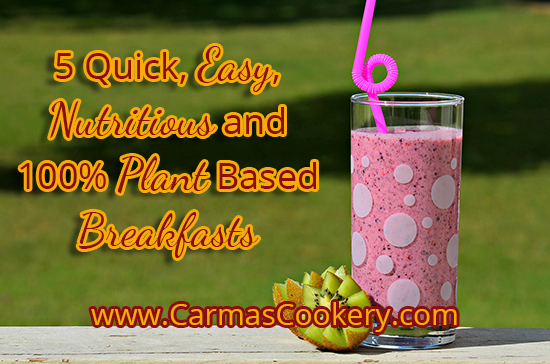
5 Quick, Easy, Nutritious And 100% Plant Based Breakfasts

It’s not just an old wive’s tale, it’s been scientifically proven that breakfast is the most important meal of the day. Recent studies show that in order to attune our diet with how our bodies naturally burn energy we should be consuming 15-25% of our daily energy intake (that’s 300–500 calories for women and 375–625 for men) at breakfast time. Of course, your nutritional gains will be dictated more by the kinds of foods you eat in the morning than when you eat them. A hastily scarfed candy bar or a lot of the sugary processed cereal bars marketed as ‘health’ foods don’t exactly constitute hearty and nutritious breakfasts.

5 Quick, Easy, Nutritious And 100% Plant Based Breakfasts

For many of us, especially in the US, it seems a choice between heavily processed and sugary cereal with cow’s milk or heavily processed and fatty bacon or sausage. Whether you’re on a vegan whole foods plant based diet or not, the importance of good quality nutrition at the breakfast table can’t be underestimated. Of course, with all the inevitable rush and bustle of an early morning, nobody wants to be a slave to the stove either. That’s why all of these nutritious breakfasts can be hustled up in 15 minutes or less. If you’re extra pushed for time, check out Chaching Queen’s breakfast recipes which can be hustled up in 5 minutes or less! They’re all totally plant based too.

Healthy Breakfasts on the Go: Raspberry and quinoa smoothie

This one is perfect for those on the go. Quinoa is one of the most nutritious grains out there and an abundant source of protein, fiber and the essential minerals like riboflavin, iron, and magnesium. Loaded with vitamins and complex carbohydrates it will stave off hunger for hours.

Ingredients

  • 1 cup quinoa, uncooked
  • 2 cups oat milk (or your favorite non-dairy milk alternative)
  • 2 cups Greek yogurt, plain
  • 4 cups frozen raspberries

Instructions

  • Cook and cool quinoa according to package directions.
  • Add all the ingredients to a blender in this order: oat milk, yogurt, quinoa, and raspberries. Blend on high (or smoothie mode) until smooth. Pour into glasses and serve immediately.

Classic Breakfast with a Twist: Vegan french toast

Yes, this breakfast classic is just as delicious without the sugar and cholesterol saturated eggs. Simply use a blend of flour and almond milk for the batter (which can also make fluffy pancakes) and soak day old bread in it before searing it in the pan for a crunchy crust with a fluffy interior! Top with peanut butter for added protein and fats or your favorite fruits for added vitamins. Pure luxury.

Comfort Food Breakfast Update: Cinnamon raisin brown rice porridge

A cheap, quick and easy (as well as gluten free) option, just cook the rice grains in almond milk over a low heat until they form a porridge-like consistency. Top it with chia seeds, coconut flakes, chopped nuts, chocolate chips, your favorite fruits… Or all of the above!

Crunchy Breakfast Option: 10-minute no-bake granola bars

Even tastier than the store bought varieties without the added refined sugars, oils and preservatives. Combining oats with nuts, seeds, dried fruits, coconut oil and your choice of honey, maple syrup or agave nectar gives you a delicious and portable breakfast that will keep you going until lunch time (or you could pack an extra one as a pre-lunch snack, I won’t tell anyone).

Hearty Breakfast Option: Vegan breakfast burritos

If you like your breakfasts savory and crunchy then this is the one for you. This plant-based twist on the traditional breakfast burrito substitutes scrambled egg for scrambled tofu with refried beans, brown rice, your choice of veggies, and a mild salsa. It’s a handful of protein, complex carbs, and healthy fats to start your day off right!

[divider]

[one_third] Healthy Eating Worksheet [/one_third]
[two_third_last]

Take Charge of Your Health!

Changing your eating habits can be tough. But it doesn’t have to be if you take a little time to think it out and create a plan.

This Healthy Eating Worksheet will walk you through the process of creating a healthy eating plan. All you need to do is print it out, set aside some time to complete it, and then fill it out. Then you can create your plan, knowing that you have addressed potential obstacles and came up with some creative ways to handle them.

Download Now [/two_third_last]

Categories
Tools of the Trade

The Kitchen Appliances Your Culinary Space Needs

Who doesn’t love helpful kitchen appliances? The one item your kitchen has to have to reduce your cooking time, increase the flavor in your food, or simply make life easier or help you to present food better. The truth is, there is such an array of kitchen appliances available that can cover our kitchen work surfaces that at some point we can run out of space to even prepare ingredients! (I’m experiencing that now since I received an array of them as wedding gifts last October.) So what kitchen appliances do you actually need? I thought I would share with you six appliances I believe you should consider.

The Kitchen Appliances Your Culinary Space Needs

Essential Kitchen Appliance #1: The pressure cooker

Have you ever gotten in from work or a long day out of the home and thought about your evening meal, only to realize that you have a big joint of meat to cook or something that is going to take far too long? We have all been there, and even the most prepared among us can have days where we forget about what we are going to cook. This is when a pressure cooker can really help. If you are ever unsure, then check out some of the pressure cooker reviews you can find online. A pressure cooker can help with reducing the time it takes to cook something, while still maintaining the flavor, the vitamins, and nutrients within the ingredients.


Essential Kitchen Appliance #2: The blender

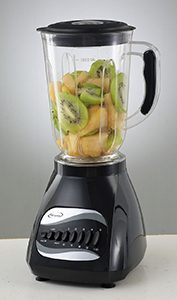
blenderI love my blenders — I have two of them, a Vitamix and a Nutribullet. The former I use as my basic blender for pretty much everything … I can even “cook” with it. The latter I use for making smoothies on the go because it comes with a handy container and lid.

Blending a sauce or making a smoothie is something many have us have grown accustomed to, so a blender is an essential within your home, wouldn’t you agree? Enabling you to blend up soups, lumpy sauces or even make your favorite fruit (or chocolate, peanut butter and banana — my favorite!) smoothie in the morning.


Essential Kitchen Appliance #3: The juicer

Juicing has become something many of us are into, so there is no surprise that a juicer is becoming one of the must-have kitchen appliances. However, aside from doing the obvious, a cooking technique to try would be to juice a vegetable, and then cook a whole vegetable within the juices of its own kind. It makes for some great flavor within your cooking.


Essential Kitchen Appliance #4: The mixer

Making cakes, kneading bread, creating meringue or simply combining wet and dry ingredients are all made easier with a mixer. This is something that every home cook would like to have in their kitchen cupboards for sure. A hand-held mixer is great to have on hand if you don’t have the space for a standing mixer. But, as I know from experience, a standing mixer makes life so much easier when doing things that require a longer mixing time, such as making whipped cream.


Essential Kitchen Appliance #5: The slow cooker

A slow cooker is something that may be more used in the colder months, but it is a great way to remain organized and have a warm home-cooked meal ready for you at the end of the day. I have two of them, one large and one medium sized. I love the simplicity of cooking with a slow cooker — just load up the pot with your ingredients, switch on the timer and let it cook all day. This works well with anything saucy, cuts of meat, stews, and casseroles. I’ve gotten the tenderest pork this way.


Essential Kitchen Appliance #6: The steamer

Finally, a steamer is a fresh and easy way to prepare vegetables while still maintaining the nutrients and vitamins within them. It can also cook fish and meat, making it a great alternative method of cooking. There are even types of bread you can make in a steamer.


Of course, there are smaller kitchen appliances and gadgets you could have, that you can store away in your cupboards and drawers, but I certainly think the above list can help even the most amateur of cooks create culinary masterpieces.

Categories
Cooking Techniques

A Delicious Asian Food Feast, Home Cooked In 5 Easy Steps

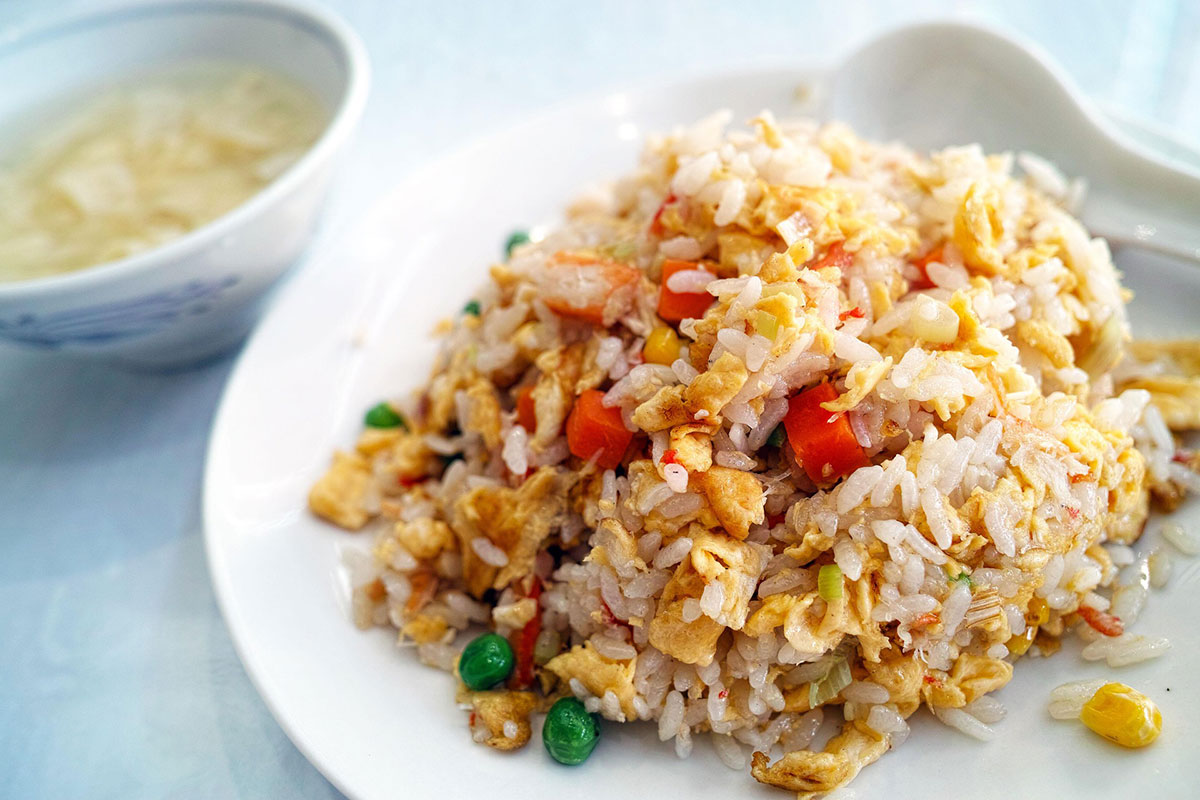
Have you ever gotten take out Asian food and thought, I bet I could do this at home? Well, now you can! And it’s not even that complicated. You just need to know the inside tricks to help you. Luckily, below you will find some of these, along with a step-by-step guide on how to create a delicious home cooked Chinese feast that includes tempura vegetables, special fried rice, and Chinese pork. Yum!

fried rice
Image link

Step One: Prepare Before You Cook

The first step is to get as much as you can ready before you start cooking. That means boiling the rice, dicing the vegetables and marinating the pork.

You can use boil in-the-bag rice as it’s way easier and always come out good. Set this to boil while you cut up bell peppers, onions, and sweet potatoes for the tempera. When this is done dice some more onions and microwave some frozen peas for the rice.

Then take your pork steaks and make a marinade from soy sauce, crushed garlic, ginger and fresh chili, as well as Chinese five spice, and rice wine vinegar. You can do this according to your taste or follow an exact recipe here. You can even throw in some duck sauce for a rich, sweet kick that goes great with the pork. Once it’s made thoroughly toss the pork in this.

Step Two: Cooking Chinese Food Ingredients

This is where you start cooking for real, so pop the pork into an ovenproof dish, and then into a preheated oven at 400 degrees F for about 20 minutes.

Remove the peas and onions from the microwave and set aside. Take an egg and make a thin omelet in the base of a wok or frying pan. Then turn this out on a cutting board and dice it into smaller pieces and leave to cool.

Step three: Deep Fry the Tempura

Create a simple batter for the tempura with flour and water. A carbonated and fruit flavored water can give the batter a delicious light texture, and slightly sweet taste that is perfect for this recipe. Get the exact measurements for a perfect batter here.

Then dredge the pepper, onion, and sweet potato pieces in flour, dip in the batter and deep fry in hot oil until crisp. Remove the from the oil and set aside on kitchen roll to allow them to drain.

Step Four: Prepare the Fried Rice

At this point, add some sesame oil to a wok or frying pan. Toss in the peas and onions. Drain the rice and add to the wok. Stir fry on a high heat for a minute or two. Adding the egg just before the end so it can heat through. Just before you serve, get the pork out the oven and make sure it’s cooked.

Step Five: Serve Your Asian Food Feast

Lastly, serve up your delicious items in separate bowls and allow your guests to help themselves. A sweet chili sauce is a great accompaniment to the tempura, and some extra soy can give the rice a nice tang. Make sure to set out both chopsticks (for that authentic experience) and forks and spoons (for your less adventurous diners).


Save

Categories
Cooking Techniques

Jamaican Jerk Chicken – Prepared Safely

Do you have a hankering for some spicy Jamaican Jerk Chicken? Before you begin, make sure that you are preparing the meat safely!

Chicken, the base of so many wonderful meals. Loved by old, young, rich, and poor, alike. It goes in our sandwiches, makes fantastic stock, and is the cornerstone of one of the biggest fast food chains in the world. It is an economical source of protein, as well.

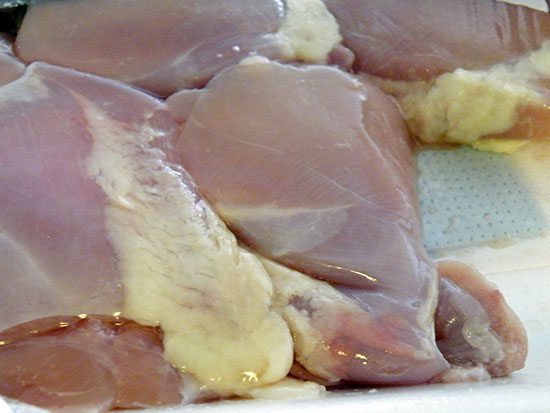
raw chicken thighs
By gran (Own work) [GFDL or CC BY 3.0], via Wikimedia Commons

But as with every meat, there is a risk of food poisoning. While you may have read about raw chicken being a delicacy in Eastern countries, the fact of the matter is that it’s not safe to eat raw chicken in any form! So here’s a little reminder of how to keep your chicken on the right side of healthy and tasty, with a tasty Jamaican jerk chicken recipe.

Safe Chicken Practices

Don’t wash your chicken! Some people have been taught to wash raw chicken but this actually helps to promote cross contamination because washing poultry can spread the juices around and therefore spread bacteria further than the immediate area. Instead, simply pat dry with a paper towel and dispose of the paper towel directly.

Avoid cross contamination. The first thing to do to avoid this is to make sure there is nothing dripping from the package and make sure you use different surfaces for different foods. Make sure your chicken stays in one area and doesn’t touch anything else before being cooked. You only have to see a number of food poisoning claims that are made in any one year due to poor hygiene in professional restaurants. There’s a lot of them! I have separate cutting boards that I use for different types of food to help with this.


Thaw properly. If a chicken has been frozen raw, three of the methods of letting it defrost naturally include: placing it in the refrigerator overnight, in the microwave, or in cold water. Never leave chicken on a counter. And make sure that you keep the temperature of the outside of the chicken less than 41°F.

Cook it properly. You need to cook the meat to a temperature of 165°F. This needs to be on the inside of the meat, so you need to use a digital thermometer that is tip sensitive as well as check the meat temperature in various spots.

Jamaican Jerk Chicken

jamaican jerk chicken
Public domain photo via Pexels

Now that you know how to prepare chicken properly, let’s make some tasty jerk chicken!

Ingredients

  • 2 tablespoons thyme
  • 1 tablespoon rosemary
  • 1 tablespoon allspice
  • 1 tablespoon ginger
  • 1 1⁄2 tablespoons sea salt
  • 1 1⁄2 teaspoons onion powder
  • 1 1⁄2 teaspoons black pepper
  • 1 1⁄2 teaspoons cinnamon
  • 3⁄4 teaspoon nutmeg
  • 3⁄4 teaspoon garlic powder
  • 3⁄4 teaspoon paprika
  • 2 teaspoons scotch bonnet peppers*
  • 12 bay leaves
  • 1⁄3 cup sugar
  • The juice of 1 lime
  • 1⁄4 cup olive oil
  • 3 lbs of chicken

Directions

  1. Ground all the ingredients (except the lime juice and oil) into a fine paste.
  2. Whisk together the lime juice and oil.
  3. Rub the chicken with lime and oil mix (but don’t marinate).
  4. Coat chicken with the ground ingredients.
  5. Refrigerate for 1-3 hours, then remove and allow it to come to almost room temperature.v
  6. Grill chicken. Once seared, move it to the indirect heat part of the grill, cook it to 165°F (internal temperature).

And voila! Enjoy with some rice and peas and you’ve got an amazing Jamaican meal!


Scotch bonnet pepper
By Temaciejewski (Own work) [CC BY-SA 4.0], via Wikimedia Commons

* Scotch bonnet peppers are also known as Bonney peppers or Caribbean red peppers. It is a variety of chili pepper named for its resemblance to a tam o’ shanter hat.

These peppers are used to flavor a variety of dishes from cuisines around the world. They are often used in hot sauces and condiments. The Scotch bonnet pepper has a sweeter flavor and stouter shape, which makes it distinct from its habanero relative (with which it is often confused). This pepper gives jerk dishes, both pork, and chicken, as well as other Caribbean dishes, their unique flavor.

The owner of this website has made a commitment to accessibility and inclusion, please report any problems that you encounter using the contact form on this website. This site uses the WP ADA Compliance Check plugin to enhance accessibility.