
- I wrote this one for a CoffeeBeanShop.com competition on “Love and Coffee”:
“Aroma of Coffee”
Alas, CoffeeBeanShop.com no longer exists, so I moved the story to my fiction and poetry webiste.
 Carma's Cookery
Carma Spence has been experimenting in the kitchen since she was four years old and loves trying out new recipe ideas. She is the author of Bonkers for Bundt Cakes and Your Perfect Pie, as well as author and contributor to several more non-food-related books. With Carma's Cookery, she is taking her passion for empowering people and blending it with her passion for cooking, gift-giving and entertaining.
What I like best about pumpkins is how versatile they are. Like most winter squash, it is nearly impossible to overcook a pumpkin. Because they have a mild flavor, the seasonings you use determine the taste of your dish.
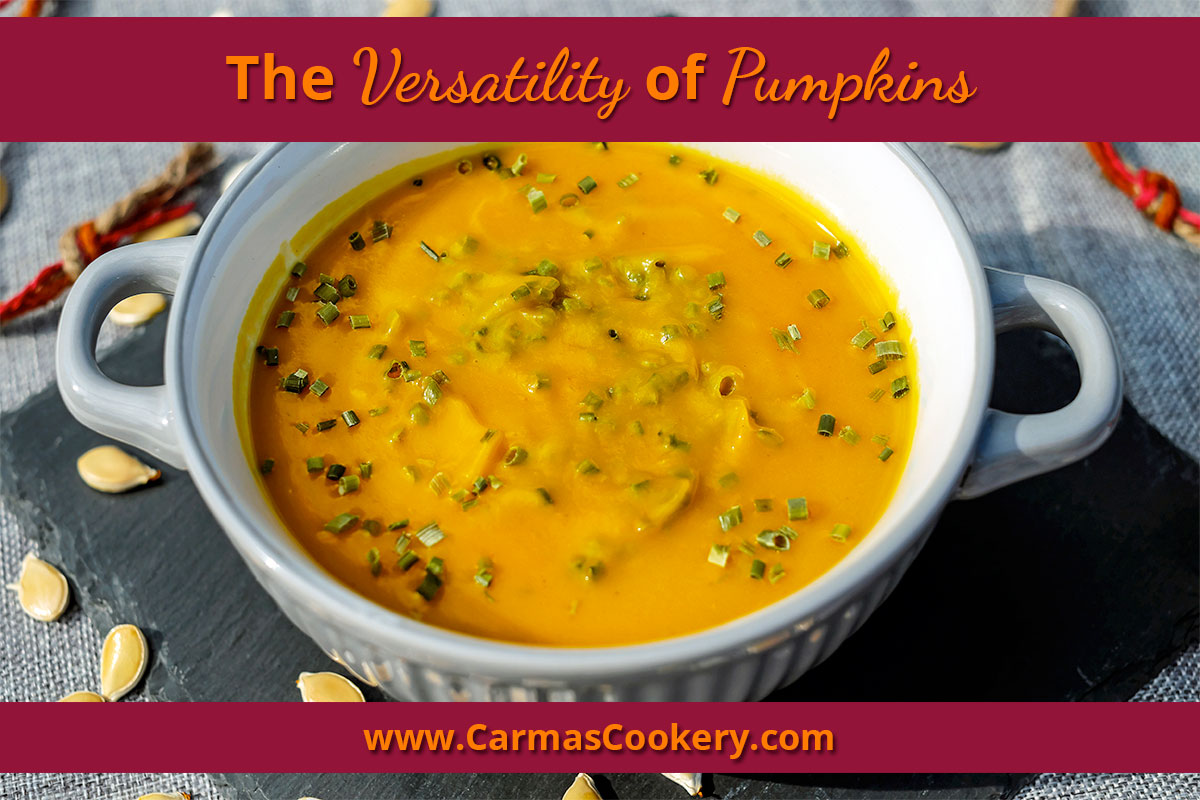
Pumpkins can be found in recipes for main dishes, side dishes, desserts, beverages and more. You can serve them steamed, roasted, boiled, sautéed, baked, stuffed and added to numerous sauces, soups and more. I’ve got more than 300 recipes I’m testing for A Passion for Pumpkins.
Most people associate pumpkins with Thanksgiving pumpkin pie, but I have to admit my favorite pumpkin recipes are savory, not sweet. One of the recipes that will be featured in the A Passion for Pumpkins is a curried lentil dish with chunks of pumpkin in it. Another is a curried pumpkin soup that is the perfect accompaniment to a sandwich on a cold, winter day.
Want a little extra fiber in your diet? Add pumpkin! This may sound strange, but I’ve been giving my dog a tablespoon of pumpkin with each meal and she no longer suffers from constipation!
I made a really good stew this weekend that I think would be great with pumpkin chunks. In a slow cooker, I combined one can of low fat condensed cream of chicken soup, one packet of onion soup mix and two and a half cans (from the cream of chicken soup) water. I mixed it up then tossed in some frozen chicken thighs and some sweet potato. I let it cook on low for 8-10 hours. And boy was it ever good! Next time, I’ll try it with pumpkin. Mmmmmm, yum.
“The ideal climate for growing pumpkins lies 4-5 degrees north and south of the 45th parallel,” says Joe Ailts of SeedOutlet.com. “Climates in these areas have sunny warm summers, with an appreciable amount of rain from May through September.” They also don’t get frost in July. In addition, pumpkins thrive when the relative humidity is about 60%.
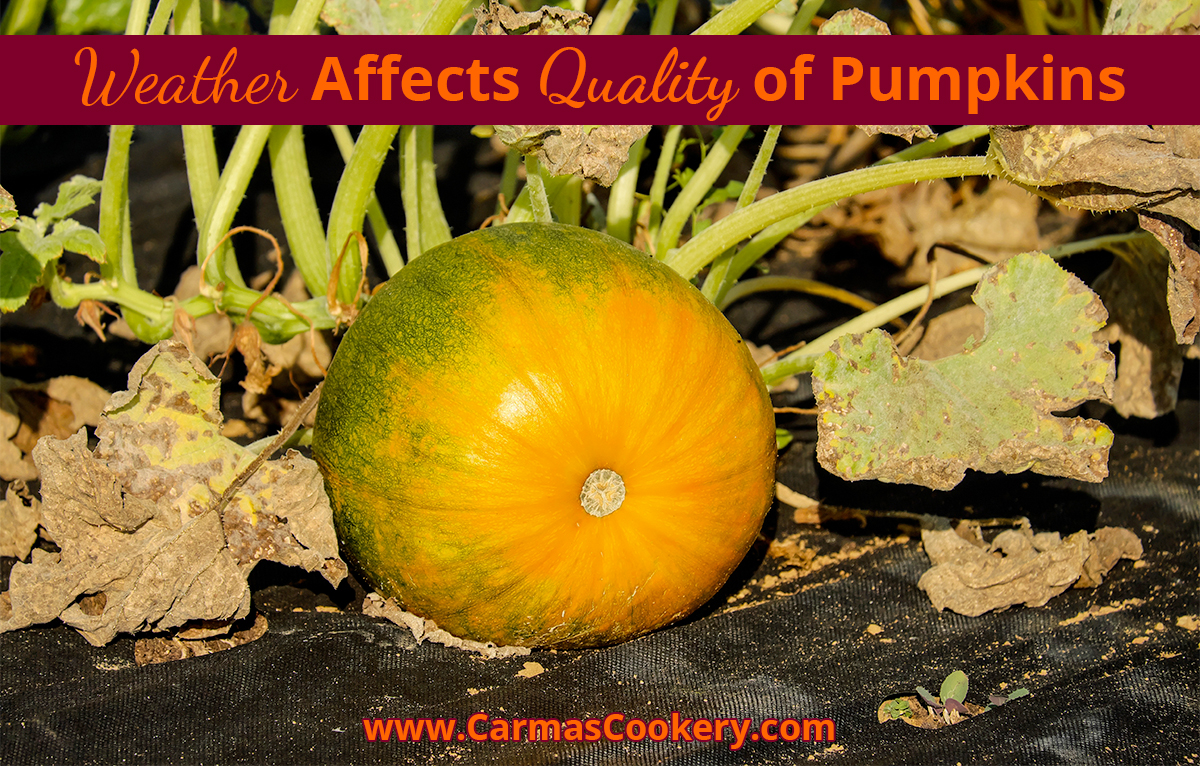
But, you can’t guarantee the weather and when things stray from the ideal or even the norm, crops can be adversely affected. In regions that have experienced heavy rainfall, pumpkins are particularly affected by Phytophthora blight, according to The American Phytopathological Society.
Phytophthora blight “has been described as the ‘most destructive disease of cucurbits’ because ‘nothing causes greater loss’,” says Margaret Tuttle McGrath of Long Island Horticultural Research and Extension Center. “Total crop loss has occurred in some fields.”
So, as a cook, how does all this affect you? Well, if you’re going to use fresh pumpkin in your recipes, you’ll need to know what to look out for when choosing your pumpkin. Here are few tips offered by The American Phytopathological Society.
Back in the day, Native Americans cut pumpkins into rings and hung them out to dry so that they would have a supply throughout the winter. Today, we just need to go to the local grocery store and buy a can.
I’ve tried both Libby’s and the generics, but I find that Libby’s gives me a more consistent flavor and texture.
If you’re contemplating making your own pumpkin pureé from fresh pumpkin, you can do so for a bit longer than pumpkin season. A whole pumpkin can be stored on the kitchen shelf for one month and in the refrigerator for one to four months. And, once made into pumpkin pureé, it can then be stored in the freezer for up to one year!
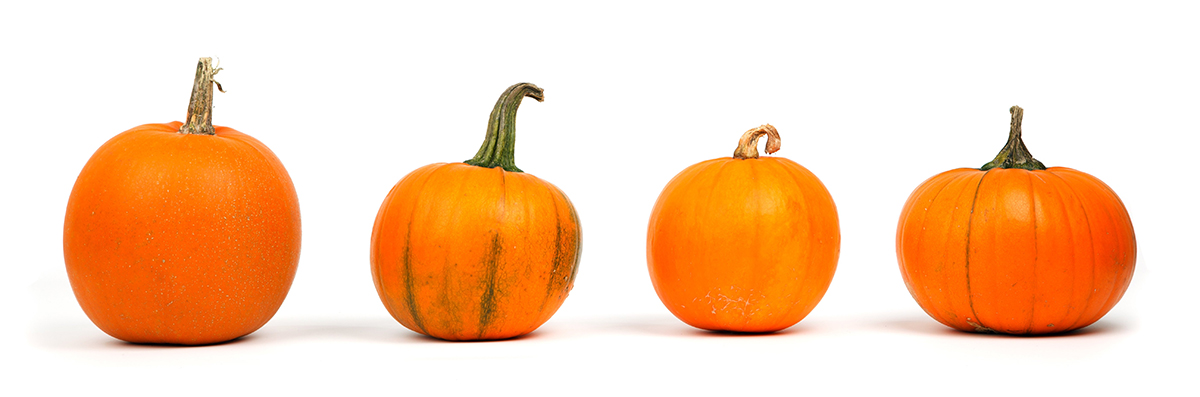
When picking a fresh pumpkin for your recipes, chose a sugar pumpkin over the common pumpkin used for jack-o-lanterns. This pumpkin will be smaller and tends to have a more burnt orange color.
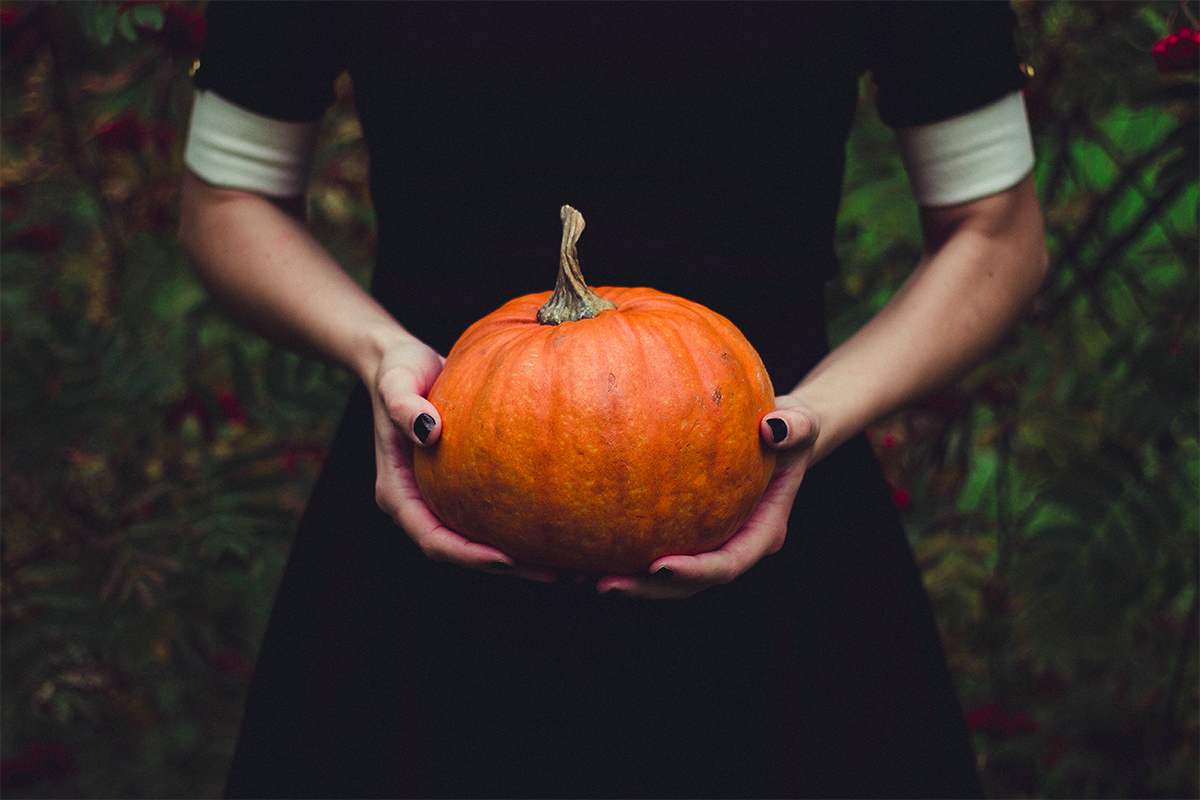
You want to look for one that is firm and has a smooth, dull, hard skin. Make sure there are no soft spots and get one with an intact stem – this will help it keep longer before you cut it.
If the pumpkin feels heavy for its size, then it will have more flesh, and therefore will make more pumpkin puree for your recipes.
Pumpkin season is October through December, but I’ve noticed that grocery stores stop selling them after Halloween. You’ll have to investigate your local grocery stores to see if they’ll have them out for longer. Or, take your business to your local pumpkin farm. You can find a listing of farms at the University of Illinois’ Pumpkins & More website.
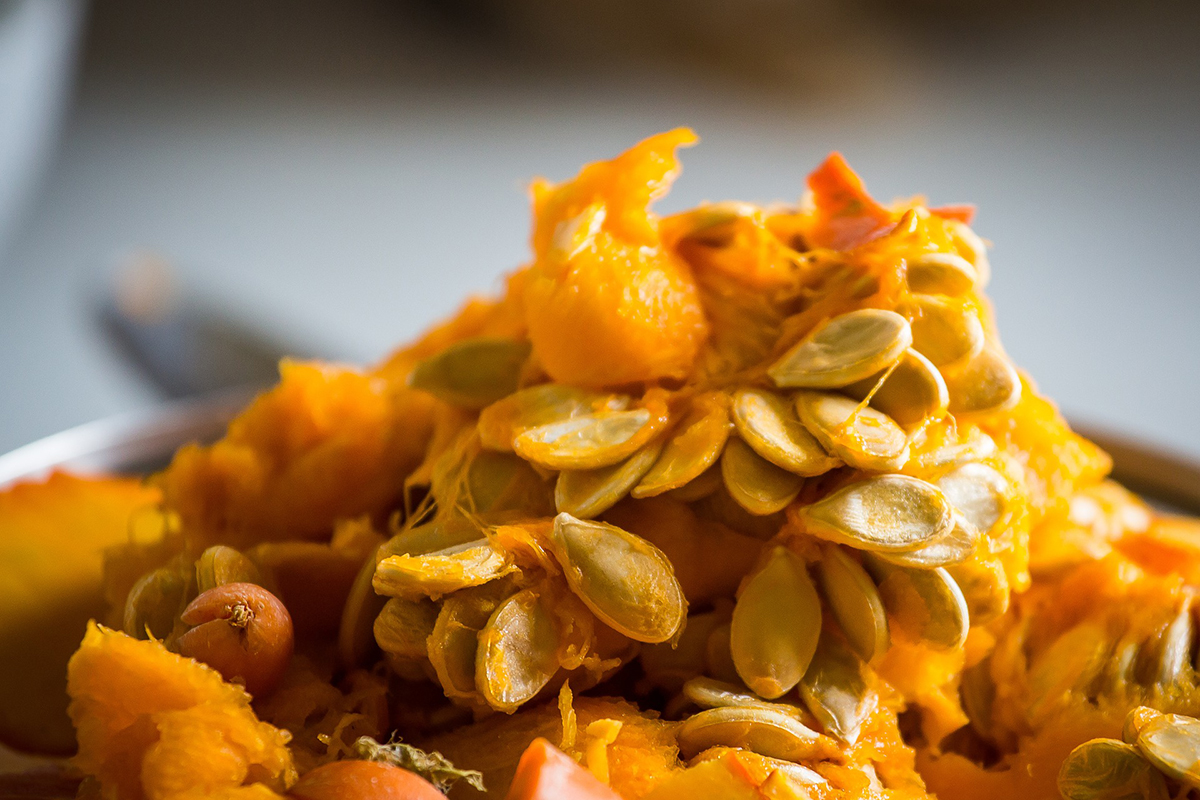
One of my favorite things about jack-o-lantern carving is pulling out the pumpkin’s pulp. I love the way the seeds squish and squirm about in my hands. I get to experience this same pleasure when preparing pumpkins, squash, and gourds for something I’m cooking. However, this festive pulp can do a real number on your plumbing if you don’t dispose of it properly (when you’re done playing with it, of course).
“The slimy pulp coats the inside walls of your pipes and garbage disposal,” says Paul Abrams, spokesman for Roto-Rooter, “then it hardens and chokes your drains.”
Roto-Rooter recommends carving pumpkins far away from the kitchen sink. Do this fun family task on a thick bed of old newspapers. Then, when your masterpiece is complete, you can just roll all the newspapers up, along with all the leftover pumpkin parts and threw it away in the trash. Never put the sticky, stringy pumpkin pulp down the drain, even if you have a garbage disposal.
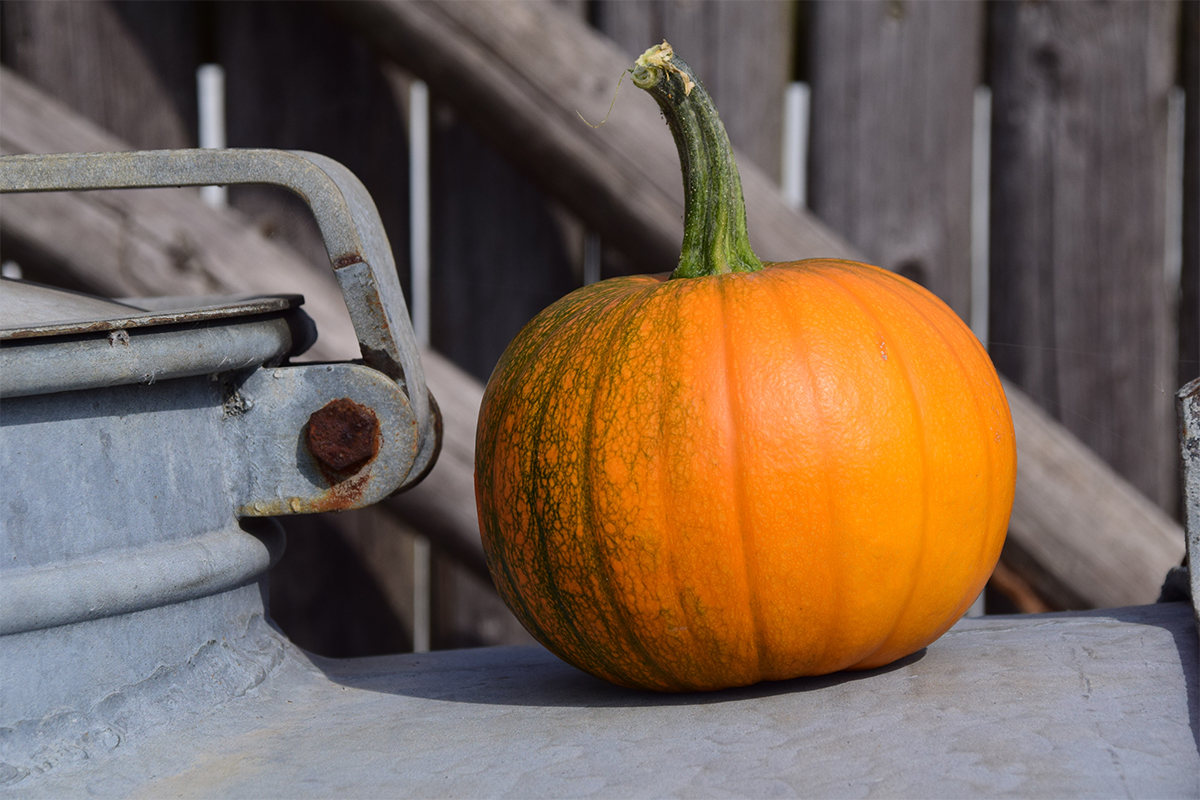
Pumpkin is a winter squash and shares much in the way of interior look, feel and taste with fellow winter squashes such as acorn, butternut and buttercup squash. In fact, in savory recipes such as soups, stews, and casseroles, they are practically interchangeable. However, when it comes to desserts, such as pies, sweet bread, and cakes, you’ll want to stick to the traditional pumpkin or branch out into buttercup or butternut.

When you purchase a buttercup squash, look for one that feels heavy for its size, is free from blemishes and soft spots, and has a rind that is deeply colored. You definitely want to avoid any squash that has soft, wrinkled, or moldy spots!

One of the most common ways to prepare butternut squash is roasting, but soup is also quite popular.